



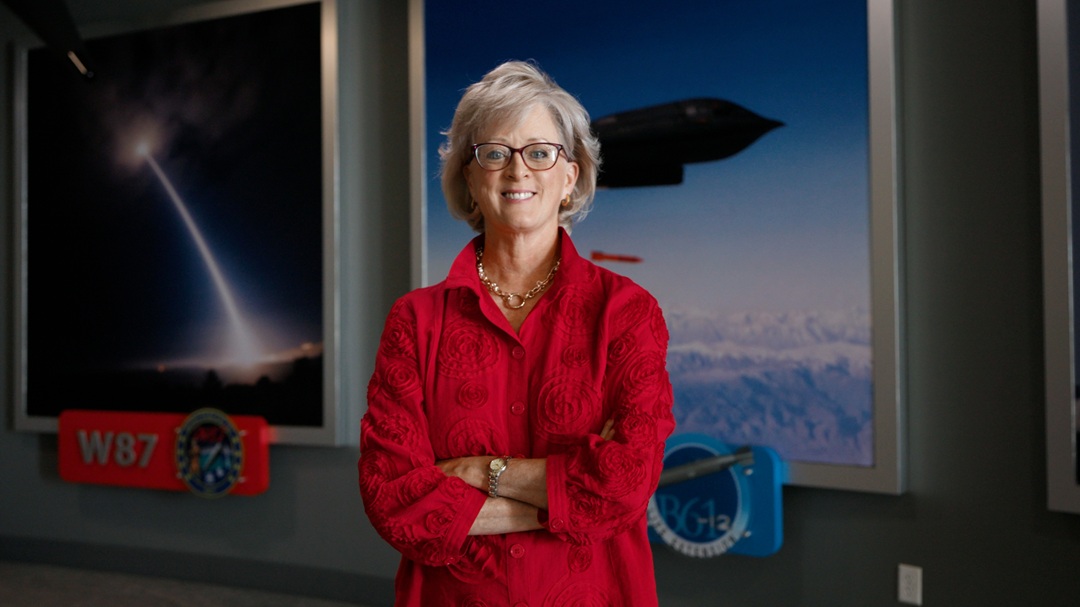
A young Dana Smith quickened her steps to keep pace with her mother. They entered the community center — a symphony of activity humming through the corridors. Smith could smell chlorine and hear water splashing among the noise. On the way to the pool where Smith would be taking her swimming lesson, an open studio caught her attention. Smith peered inside, not realizing her life was about to change.
“It was a little ballet studio with mirrors and the barre. I stopped to watch part of a class,” Smith said. “Those girls with their hair in a bun and their toe shoes and their skirts and their tutus — that was it. That’s what I wanted to do.”
At just under five years old, Smith began ballet and advanced quickly, moving from the Denver Civic Ballet to the North Carolina School for the Arts. After high school, Dana joined the traveling company known as the Washington Ballet.
“We spent more time on the road than we did in Washington, D.C. We traveled to South America and Asia,” Smith said. “It was interesting to see those cultures and interact with them, but there were parts of it that were sobering. It really opened my eyes to how unique the experience was and made me a little more grateful for it.”
Seven demanding, transformative years with the Washington Ballet produced unforgettable memories and challenging performances.
One piece was called “Glow of the Night,” performed at a benefit gala put on by English ballerina Margot Fonteyn. Appointed by Queen Elizabeth II as Prima Ballerina Absoluta — a title awarded to the most supreme female ballet dancers — Fonteyn held celebrity status, but Smith remained composed both in meeting her and performing on stage in front of her.
“It was like meeting the Audrey Hepburn of the dance world. She was gracious and kind. She just had this aura,” Smith said. “As for the performance, I don’t know if I willed it or if there was a bit of magic out there, but it was one of the only times I felt truly unbound — like I had a freedom in my body and my movement. It was so intense that when it was over, I cried.”
The most challenging piece in Smith’s career was “The Unknown Territory” created by Singaporean ballet dancer and choreographer Choo San Gogh, resident artist director at the Washington Ballet. Under his direction, Smith further cultivated her grace, developing great respect for and more importantly, a strong friendship with him.
“The piece was very abstract. It was about tribal people engaging in kind of a ritual, including a wedding,” Smith said. “The company really enjoyed it, but it was extremely difficult to try to tell that story through dance in a way that would resonate with people.”
Smith continued to evolve in studio and on stage, drawn to the unmatched blend of the tangible and intangible naturally embodied in the medium.
“I enjoyed the athleticism of it — the physical challenge of improving technique. Then as you grow, the next challenge is to combine physicality with artistry and find a way to be a performer that is interesting to people,” said Smith. “You can't just do the steps, there’s a way you must hear the musicality, the way you syncopate your movement, and the way you can project emotion.”
Yet, as with any performance, there’s always a final curtain call. Smith began to feel hers was on the way.
“I realized my talent had taken me as far as it was going to go, and dance had begun to feel more like work than passion,” Smith said.
Then came tragedy.
“Choo San and I had a very close relationship,” Smith said, tears glossing her eyes. “We shared a birthday. He liked to talk about non-ballet things such as life, about growing up in Singapore, and many other things. So, when he passed away, a little part of my love of dance passed with him.”
Although heavy with loss and burned out by demand, Smith didn’t move on from dancing right away. She carried on, taking the stage several times as one of two performers in contemporary piece called “The Time Before the Time After (After the Time Before), a demanding 17-minute duet with no costumes, characters, or pageantry — only the dance.
“When you strip away those elements, performing in a way that keeps the audience engaged in what you were doing is hard,” Smith said. “Achieving that level of audience attention without much of the artifice that sometimes comes with classical ballet was memorable.”
However, this piece was unforgettable to Smith for another reason. One day, Smith and her partner rehearsed the piece before the performance on that evening’s agenda, which was also to include a special memorial for Choo San. In attendance was Mikhail Baryshnikov, the preeminent male ballet dancer. Baryshnikov had commissioned Choo San to create a piece for him, and that night, Baryshnikov was to speak at his memorial.
Once rehearsal wrapped, Smith clipped on her Walkman, slid on her headphones and zoned out to music. Moments later, she felt a tap on her shoulder.
“Baryshnikov was standing two feet from me,” Smith said. “He placed a hand on my shoulder and said, ‘It’s nice what you do.’ He’d been watching us rehearse from darkness of the house seats. That was a high point in my life, getting that accolade from someone like him.”
While Baryshnikov’s words resonated warmly within, Smith knew it was time to earn an education and begin a professional career outside of dancing.
Smith headed back to Denver, her hometown, and went into paralegal studies, eventually acquiring a job in the field.
“It was liberating, to be free from the constant expectations from dance,” Smith said. “But ironically, I did struggle with that loss. It was difficult. So, I went back to performing, just on a smaller scale.”
For three years, Smith was a big fish in a small pond. Her resurgence into dance was now less of a demanding profession and more of a joy. But that joy was only temporary.
“I reached a point where I just realized I didn't want to do it any longer. It wasn't who I was anymore,” Smith said. “I never ever had any desire to teach or become a ballet master so I left that world. But that chance to continue performing in a way that was just a passion and not work made it easier to walk away.”
Smith spent 37 years in the paralegal world, and like her career in dance, she reached a point where she knew it was time to move on. That move was to Pantex.
Smith works in IT as the business office resource and portfolio specialist. She manages the intake of project requests and makes certain they are shepherded through the process and are in the appropriate portfolios. And although she enjoys what she does, there’s one thing that she really loves about Pantex.
“The extraordinary people,” Smith said. “They’re willing to share knowledge and give time. There’s genuine support, from leadership down to my team, and I sincerely enjoy working with them every day.”
Although ballet remains a poignant part of Smith’s life, she remains thankful. Thankful for the memories, the expression, the artistry, and the character strengths it provided her.
“Dance gave me discipline, perseverance, and focus to work harder than the other person, even when I feel like I'm at the end of my rope,” Smith said. “When life is overwhelming, it helps me remain mentally focused, to push on, that I can always find a little something more in myself.”
Learn more about Dana Smith.