



News
Hub of the High Explosives Center of Excellence
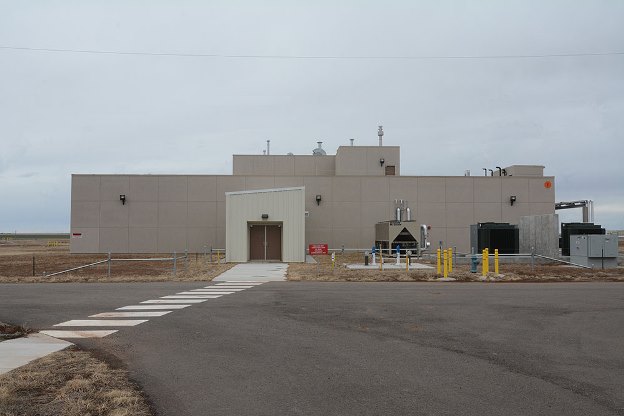
The Pantex Plant manufactures high explosives to support the nation’s nuclear deterrent. Nuclear weapons require both high‑explosive charges and special nuclear material. Pantex’s experts manufacture the main‑charge high explosive by making the raw munitions powder, heating it in ovens and pressing it into a solid. The main‑charge high explosive surrounds the nuclear core, or pit, of a weapon.
For more than 50 years, the Pantex Plant has manufactured high‑explosive charges for every weapon in the nation’s nuclear stockpile. Much of that work is carried out in six aging facilities. But soon, high‑explosive operations will be conducted in the site’s newly built High Explosives Pressing Facility. The one‑of‑a‑kind HEPF will consolidate processes in a single modern facility, increase manufacturing throughput by 180 percent, and over the life of the facility, save $92 million in high‑explosive transportation costs.
For Lennon Mings, HEPF represents a quantum leap in high‑explosives operations. “This is a huge advancement,” said Mings, a high‑explosives pressing engineer. “While Pantex has always been at the forefront of pressing operations, HEPF will allow us to increase not only productivity but also our capability both in the size of explosive components and in improved process control, which equates to a better quality product.”
|
|
Mings and other Pantex engineers and technicians helped design the processes in the new facility so that equipment and tools are within easy reach, which drives efficiency, nearly doubles throughput without adding personnel and increases worker protection. Moreover, detailed information in the design model will aid in machine maintenance and repair.
Not surprisingly, the new facility will change how Mings does his job. “HEPF will be more reliable, which will free up my time to play a more active engineering role in operations,” he said. “I won’t spend nearly as much time troubleshooting issues with ovens and ancillary equipment that support pressing.”
In addition to more efficient processes and a revitalized infrastructure, other HEPF benefits include improved safety and reduced transportation costs. The 45,000‑square‑foot facility consolidates packaging, staging, pressing, machining and density operations, which decreases risks and costs associated with transporting a main‑charge high explosive from one building to the next.
“Because process facilities are scattered, today a main‑charge high explosive moves all over the site,” said Robert McClary, who heads up Pantex’s High Explosives Manufacturing organization.
“Every time you move it, there’s a risk … the potential to drop it or have a vehicle accident. With HEPF most everything is in one place, so we significantly lower that risk and save on transportation costs.”
Now that HEPF construction is complete, CNS personnel are prepping the facility for startup. Tooling is being moved in, network and security systems are being added and detailed procedures are being developed so that operations can begin by fall 2016. “We’ve got the keys to the building and now are readying it to make it operational,” McClary said.
Once operational, HEPF will be the hub of the Department of Energy’s High Explosives Center of Excellence for manufacturing.
“I grew up in Amarillo and for many years didn’t know the important role that Pantex plays in national security,” said Monty Cates, director of Explosive Operations at Pantex. “Now, as an employee, I can tell you we meet the mission daily. When we leave our homes in the morning to come to work, our goal is to protect our families and our nation. We know HEPF is key to securing America’s future.”
Building Makeovers - Vehicle Maintenance Facility
Operations began at the Pantex Plant in 1942, so it's no surprise many of the almost 650 buildings are in need of repair, renovations or refurbishment. Many of the issues with facilities were identified in the Quality of Life list that was developed after the Safety Culture Surveys in 2010 and 2011. Here’s an update on the Vehicle Maintenance Facility (VMF)at Pantex.
Although the VMF is a few decades newer than its predecessors, it has been in use since the 1980s – more than 30 years with no upgrades. In one break room, wallpaper was peeling and everything in the area seemed to stay damp. The kitchen area was completely overhauled with new cabinets, a sink and an oven. The mechanics break room was completely gutted and new dry wall was installed and painted.
Contractors also re-sealed the windows and replaced the floor. In addition, new filing cabinets were installed to honor requests to expand the storage in the break room.
The restrooms were equally problematic with dirt, stains and leakage. All the restrooms and shower facilities have been replaced completely. New flooring, dry wall, tile, lavatories, and plumbing were installed. The windows were re-sealed and some lockers were replaced.
Finally, an upstairs office was converted to a main conference room and smaller offices including new tile floor, painting and new cubicles. All the flooring, damaged or dirty ceiling tiles, and HVAC vents in the first and second levels were replaced.
The transformation was completed over seven months. The repaired areas look like new, and only products designed for longevity were used in the renovation.
VMF Men's Shower Before and After

VMF Mechanic's Break Room Before and After
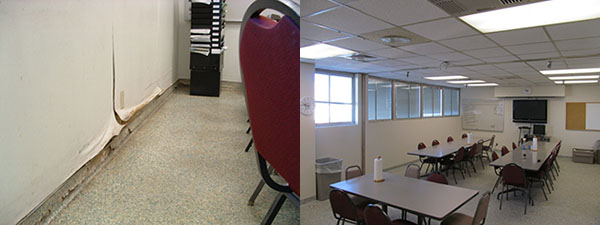
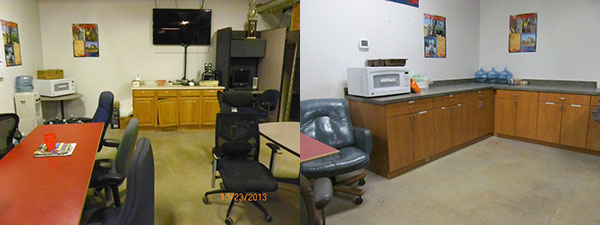
VMF Yard Group's Break Room Before and After
GWI Plan Ensures Focused, Consistent Approach to Improvements
Three years ago as part of the Quality of Life initiative, Y12 Production developed a standardized checklist for evaluating livability in the production facilities from criteria used by restaurants, schools and other public facilities. This systematic approach for renovations, using a standardized evaluation form, helped ensure equality across the facilities. Now, this evaluation method has been adopted enterprise wide and incorporated into the CNS General Workplace Improvement (GWI) Program Plan issued in January.
The intent of the GWI program is to identify, prioritize and execute activities that will improve the work environments at Pantex and Y12. The plan provides guidance for prioritization and execution of GWI projects and will be updated annually to define and communicate planned projects.
GWI Program Manager Jim Reilly said, “GWI investments provide basic human needs and help maintain or improve personnel safety. The GWI plan will ensure a focused and consistent approach to improving the workplace environments at both sites.”
GWI projects will concentrate on common areas, such as breakrooms, office areas, lunchrooms, restrooms, change houses, lobbies and parking lots, with improvements to lighting, HVAC systems, plumbing, carpentry, roof repairs, painting and walking surfaces. Renovations will be prioritized based on safety risk, severity of existing conditions, number of people affected, as well as future use.
In FY 2014, $9.3 million was invested in GWI, and both sites combined addressed nearly 500 GWI-related projects, which included direct employee concerns identified through the Pantex Safety Culture Advocates and the Y12 Employee-Driven Safety Campaign.
“The success of the GWI program is dependent on feedback from employees to identify scope and evaluate the effectiveness of completed improvement activities,” Reilly said. Currently, Y12 building managers and Atomic Trades and Labor Council safety representatives are reevaluating conditions in facility common areas by performing walk downs together and updating the 2012 ratings. A similar analysis is being performed at Pantex.
After the data are collected, the information from both sites will be evaluated and ranked by the Safety Culture Monitoring Panel to identify the highest-priority projects for the next fiscal year.
In FY 2015, several GWI projects are underway. At Pantex, six restroom/shower areas in Buildings 12-5, 12-5C and 12-6 are being refurbished, and the hot water system in Building 12-103, one of the plant’s primary change areas, is being replaced. Similarly, at Y12, the Post 8 pedestrian checkpoint has been enclosed to provide a climate-controlled area for personnel processing through the area. A second Y12 project involves reconfiguring the Building 9119 auditorium to provide a modern, large group meeting area inside the protected area.
“CNS is committed to investing in the GWI initiative to improve workplace conditions. The poor conditions in some areas that resulted from years of deferred maintenance, as well as everyday use, do not provide optimal working conditions. Such conditions lower morale and degrade the safety conscious work environment,” said Paul Wasilko, CNS Safety Culture program manager.
“Our goal is to strengthen our safety culture by addressing the needed improvements. These conditions cannot all be fixed overnight — but we now have a process in place to identify and prioritize the needed improvements.”
Energy Contracts Help Sites Achieve Savings, Sustainability

Typical mortgage loans allow borrowers to purchase a home without paying the full cost upfront. In a similar manner, energy savings performance contracts, or ESPCs, allow Consolidated Nuclear Security, LLC, to complete projects at Pantex and Y12 that improve energy efficiency and support infrastructure renewal and reliability without upfront capital.
During the past few years, the National Nuclear Security Administration Production Office has partnered with two energy service companies on ESPCs at Pantex and Y12 as part of an enterprise-wide initiative to improve energy efficiency and revitalize site infrastructure.
Senior Director of Infrastructure and Projects Management Dan Glenn said, “The energy service company puts up the capital to do the work, and we pay them back through the energy savings gained over the term of the contract.”
At Pantex, an ESPC with Siemens Government Technologies Inc. has enabled the plant to harness the power of wind energy with the installation of five 2.3megawatt wind turbines capable of producing approximately 47 million kilowatt-hours of electricity annually.
During installation of the wind turbines, Infrastructure and Projects Management worked with Pantex Engineering to address a concern about possible voltage fluctuations affecting the plant’s sensitive equipment. The solution was to install a power quality meter to monitor the specific output of the wind farm. The 426foottall turbines can generate enough energy cost-savings to pay for the project and later provide additional cost savings directly to Pantex. In the month of May, the wind farm produced 4,022,647 kWh, which was 66% of the plant’s total energy consumption.
At Y12, the ESPC projects, managed by Johnson Controls, Inc., are having noticeable impact on the utility infrastructure, as well as the site’s energy efficiency.
“We wouldn’t have the budget to do this work at Y12 without an ESPC. More money becomes available because it is tied to energy savings. We try to leverage all funding opportunities to improve the infrastructure to make it more reliable and reduce the maintenance needs of the site,” Glenn said.
Currently, there are five main projects at different stages of progress, including the chiller plant upgrade, steam system decentralization, lighting upgrades, a new compressed air facility and steam system repairs. The upfront capital for these projects is funded by JCI; however, Y12 is responsible for support costs, including activities such as lock out/tag out, utility surveys and engineering drawing review.
Providing support funding and coordinating activities to lessen the impact to mission work and schedule are some of the challenges that come with ESPCs.
“These projects improve plant reliability, operational efficiency and infrastructure, and eliminate a significant amount of deferred maintenance. We invest our funds into the support costs for the ESPCs because we know of the bigger benefit to the site,” Glenn said.
“Improving energy efficiency and revitalizing the infrastructure is an enterprise-wide initiative, and we’ll continue to leverage ESPCs to help achieve our sustainability goal.”
Staying Active - for Life
More than 800 CNS employees participated in the Active for Life Challenge April 1–June 3. This 10-week program encourages people to be more active and eat healthier foods on a regular basis.
“It was terrific to see people out walking around the plant, in the gyms in town or participating in group activities during lunch,” Sherry Philyaw, Pantex Active for Life captain, said. “My favorite part was seeing people getting active and taking charge of their own health.”
Karen Lacey, LiveWise dietitian and Y-12 Active for Life captain, agreed. “I loved seeing our teams participating at the Secret City 5K and Relay for Life. Our multiple onsite challenges (longest plank, most pushups) encouraged some great competiveness between us and Pantex.”
The overall top CNS team was TEAM V, located at Pantex. This Active for Life team truly embodied the CNS OneTeam vision. Pantexan Marc Brooks explained, “While six of us are here at Pantex, one of your own (Eric White, who works at Pantex about 25 percent), was also a member of TEAM V. So, the top CNS team was a joint effort of Pantex and Y12 after all!”
While Pantex and Y12 didn’t place in the top category for the multi-lab challenge, CNS employees can be proud.
Lacey said, “CNS participants averaged over 46 minutes per day, which meets and exceeds recommendations for overall health and minimizing risk of chronic disease, and far exceeds national averages for activity. It thrills me to see these numbers!”
Lacey and Philyaw are already planning for next year’s campaign.
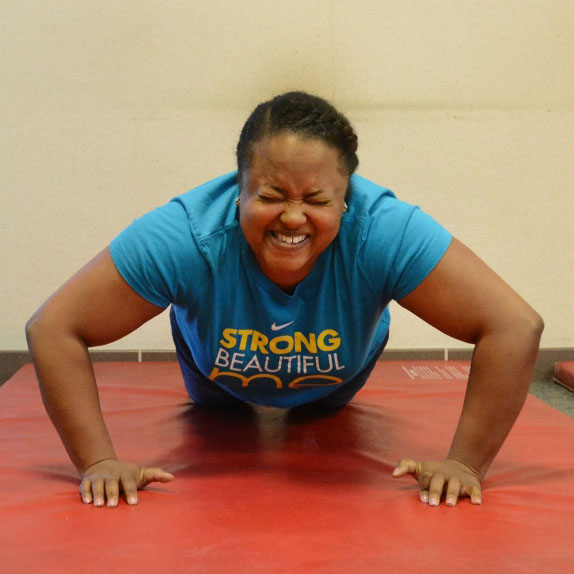
Allison Roberts was one of the more than 800 CNS employees who participated in Active for Life
Education on Aisle Nine

Grocery shopping. Some people carefully plan a weekly menu and painstakingly make a list in an attempt to stick to their budget. Others dread the task so much they just show up at the store hungry, throw items in the cart and go home hoping to make a meal of their basket full of random purchases.
Regardless of which category they fit in, several Pantexans recently turned this mundane weekly task into a fun educational event.
The employees and some family members visited two local grocery stores for healthy shopping tours. The tours, hosted by Market Street United and Natural Grocers, were part of the Active for Life Challenge, a 10-week American Cancer Society program to encourage employees to be more active and eat healthier foods.
At Natural Grocers, the store manager and employees provided an aisle-by-aisle overview of many healthy food products and supplements. They talked about food philosophy and standards. The produce manager even cut a blood orange for participants to taste. Attendees also took home a new product sample and some literature from the store’s nutrition library.
Kelly Delgado-Goudschaal, manager of Pantex Supply Chain Management Transformation and Strategic Initiatives, was impressed by the store’s advice to gradually convert to a healthier lifestyle.
“The store manager encouraged us to make small changes instead of jumping off a cliff into health eating,” Delgado-Goudschaal said. “The prices were also not as expensive as I expected.”
She made the tour a family affair by bringing her wife and three daughters along. The kids said the samples offered during the tour were “not as gross as they expected”.
At Market Street United, a certified dietician offered a two-hour Easy Diabetes Shopping store tour designed to help diabetics make healthier shopping decisions.
Pantex Engineer Sharon Smith said, “The tour was fantastic! We learned how to use the special number on the price stickers to help us choose the healthier items”.
Those who couldn’t attend a store tour were encouraged to complete a grocery store scavenger hunt to learn about product placement and labeling.

Pantex Fire Department wins BBQ Competition
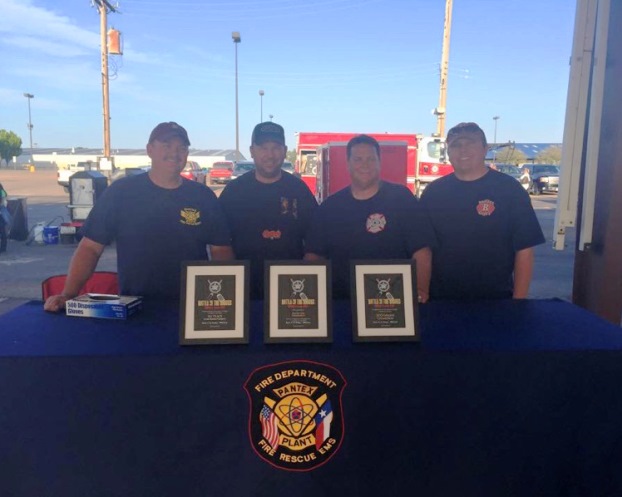
Pantex Fire Department members (left to right) David Stewart, Kyle Butler, Scott Johnson and Jeremy Baker won the 100 Club of the Texas Panhandle’s “Battle of the Badges” barbeque cook-off. The team donated their $1,000 cash prize back to the 100 Club.
The Pantex Fire Department recently participated in the 100 Club of the Texas Panhandle’s annual “Battles of the Badges” barbecue cook-off, a competition between Amarillo area law enforcement and firefighters.
Pantex firefighters won the grand championship for their brisket and placed seventh in
the ribs category. The team received award plaques and a cash prize of $1000, which
they donated back to the 100 Club. The winning team members were Scott Johnson,
battalion chief; David Stewart, captain; Kyle Butler, driver/operator; and Jeremy Baker,
firefighter/paramedic.
The 100 Club provides financial aid for families of public safety personnel who are
seriously injured or killed in the line of duty. In addition, as funds are available, the club
provides law enforcement and firefighting agencies with life-protecting equipment and
educational opportunities that cannot be secured through budgeted funds or agencies. It
serves the 26 Texas Panhandle counties.
A tiny house that STEMs from big hearts
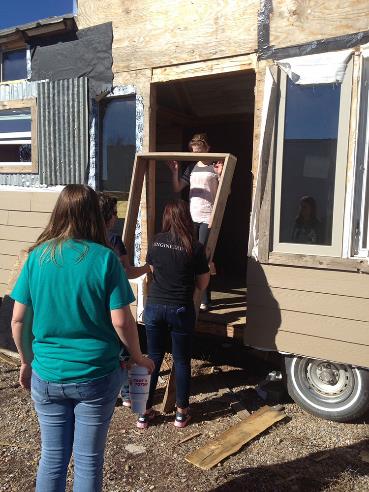
CNS employees are teaching Girl Scouts valuable STEM skills while leading an Amarillo-wide effort to transform an old camper into a tiny home for a woman in need.
Don’t expect a lot of girl talk from Savannah Gates, Rebecca Heinen, Brandy Ramirez and Courtney Waddell. When they get together, they “do.” Naturally, when the Pantex engineers had the opportunity to share what a STEM education is all about with a group of Girl Scouts, they didn’t pull out the trusty (translate “dull”) PowerPoint presentation. They put tools in the girls’ hands and showed them instead.
“I didn’t get into engineering for the sake of engineering,” said Gates, a mechanical engineer who works in Production and Manufacturing Engineering. “I got an engineering degree because it’s the love of what I could do with it in my personal life. I am passionate about using my skills to make my community a better place to live.”
The four Pantexans have worked with local Girl Scout troops on several community improvement projects and engineering‑related activities. To encourage the girls to consider careers in science, technology, engineering and math, or STEM, the engineers involved them in building a “tiny house” to give them hands‑on STEM skills.
Tiny houses are part of a growing trend to lead a simpler, lower‑cost lifestyle, one that many times involves having a reduced ecological impact. Tiny houses are just that — small, usually less than 300 square feet. Some are off‑the‑grid, generating their own electricity, and capture rainwater. They can be portable or attached to slabs. Tiny homes are less expensive to build than larger‑scale homes and are easier and cheaper to maintain.
Gates, Heinen, Ramirez, Waddell and the Girl Scouts are working alongside Pantex carpenters, electricians and welders, who’ve donated their services, as well as city planning officials, community volunteers and businesses, which have contributed supplies, to transform an old camper into a tiny home for a woman in need.
Only 16 percent of American high school seniors are proficient in math and interested in a STEM career. Even among those who do go on to pursue a college major in STEM fields, only about half choose to work in a related career. The U.S. is falling behind internationally, ranking 25th in math and 17th in science among industrialized nations. Source: U.S. Department of Education |
“After hearing about the girls’ efforts from a local news story, our fellow Pantexans began to volunteer their supplies, time and skills to aid in this great cause. This is really an Amarillo‑wide effort spearheaded by Pantex,” said Heinen, who has a degree in industrial engineering. “The house, which is part of a larger community of planned tiny homes, will be for a single mom or woman coming from a poisonous environment, perhaps drug addiction or abuse.”
The Pantexans are teaching the Girl Scouts practical STEM skills through trade work. “We’re breaking away from the traditional STEM classroom approach,” Gates said. “The girls are installing doors and new windows. We’ve put tools in their hands and are showing them how to use them. They’re loving it.”
Imparting their engineering skills isn’t the only motivator for the engineers; they also want to mentor the girls on the importance of giving back to their communities.
“I am always excited to help others,” said Ramirez, a facility engineer in System Engineering. “This project presented a great opportunity to help others as well as teach young girls about engineering and construction. Having a part in building strong, smart, caring young women is very rewarding.”
Waddell, a mechanical engineer, agrees. “The best part of working with my Pantex colleagues is seeing how much love there is for our community,” she said. “The group is constantly looking for ways to give back, and this project is a perfect example of that.”
Pantexans Attend National Honor Guard Academy
Each day, highly-trained first responders proudly don a Pantex firefighter or security police officer (SPO) uniform ready to respond to any potential emergency situations and contribute to the important Pantex mission.
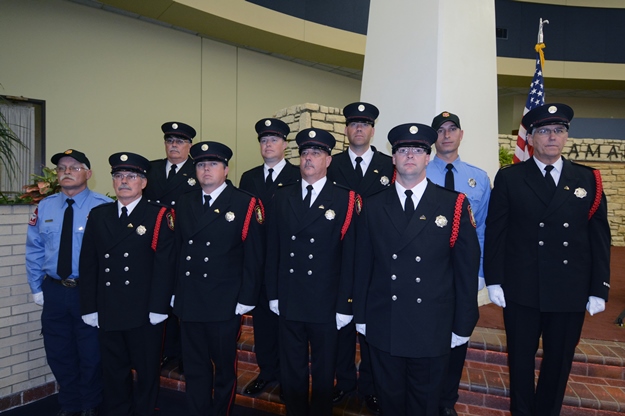
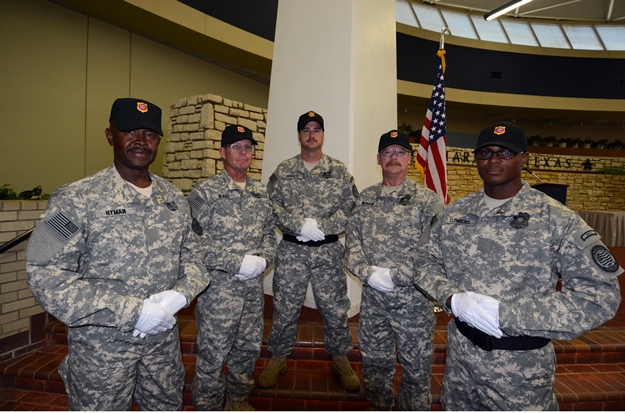
Last October, several of these Pantexans opted for more extensive training with the National Honor Guard Academy class hosted in Amarillo by Potter County Fire and Rescue. Ten members of the Pantex Fire Department (PXFD) Honor Guard and five SPOs graduated from the class after six days of rigorous training.
The Pantexans joined other Amarillo area firefighters and law enforcement personnel in an intense week-long “boot camp” with courses in basic drill and ceremonial movements, flag etiquette, uniform care, casket protocol and even a mock funeral service.
Attending the National Honor Guard Academy training sparked interest in creating a Pantex SPO Honor Guard and provided an opportunity for the PXFD Honor Guard to improve and formalize its already established procedures.
“We started looking for a standardized way to do things like in the military,” said Donovan Morgan, PXFD battalion chief and Honor Guard member. “We wanted to be able to blend into ceremonies with other first responders.”
Members of the PXFD established the Honor Guard in 2011 to show respect and compassion to families of fallen firefighters and law enforcement personnel. They developed their own operations manual, flag and uniform, which Morgan is quick to point out has no rank insignia.
“We might have different ranks in our day-to-day work, but there is no rank in the Honor Guard. We all come together to honor our fallen brother or sister,” Morgan said. “It’s not about us. Our main goal is to show respect to the family.”
The group offers fire service funerals at three response levels based on the nature of the death, and occasionally provides flag and color guard presentations for other official ceremonies.
In addition to supporting Pantex and local area memorial services and official ceremonies, the PXFD Honor Guard also travels on their own time and at their own expense to support services honoring first responders killed in the line-of-duty across the country. They have traveled as far as south as Houston and as far west as Prescott, Arizona. Each September, they even attend a ceremony at the International Association of Fire Fighters Fallen Fire Fighter Memorial in Colorado Springs.
Jody Baker, a Pantex firefighter/paramedic who died in a off-duty vehicle accident December 25, 2011, was very instrumental in organizing the PXFD Honor Guard. After Baker’s death, they were filled with a greater sense of duty and pride.
What began as a way for Pantex firefighters to honor fallen first responders and their families has become a living tribute to one of their own.
Pantex Honors Small Business of the Year
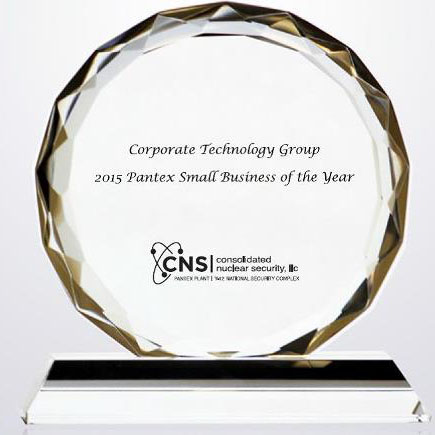
Recently, Pantex partnered up with the West Texas A&M Procurement Center and Small Business Development Center to provide local and regional small businesses with opportunities in the Federal arena at the 2015 Pantex Small Business Symposium.
Rick Palmer, Director of the WTAMU Procurement Center saw this program as a great opportunity to gather all the parties in one room and get down to the business of small business.
“The mission and goal…is to get great local businesses together with potential clients such as governmental agencies and their contractors. We were able to accomplish this by hosting a showcase event where the CNS Pantex managers met many local companies and their people,” Palmer said.
Presentations were made by Pantex, WTAMU, Small Business Administration, the city of Amarillo and its Mayor Paul Harpole, all designed to help walk attendees through the procurement process.
The highlight of the day was a ceremony to recognize the 2015 Pantex Small Business of the Year award, presented by Mayor Harpole and Caleb Pool, representing 13th Congressional District Representative Mac Thornberry’s office.
This year, the award went to Corporate Technology Group (CTG); a locally owned, Woman Owned Small Business, committed to excellence in all phases of business. They provide extraordinary customer service and in FY2014, CTG had a 95.1% overall success rating with Pantex for on-time delivery. CTG met or exceeded Pantex’s goals in almost all instances, negotiated with manufacturers and vendors to lower costs while still meeting required Pantex deadlines.
Monica Graham-Carlson, Pantex Small Business Program Manager, was pleased with the turnout and the commitment made to the small business entrepreneur.
“I think the event was a great success. Pantex is committed to including small businesses in contracting opportunities and believe this event allowed us to reflect on that commitment.”