



News
Helping our neighbors: Pantex in the community
Sixteen nonprofits in the Texas Panhandle will be better able to expand or continue their missions thanks to grants from Consolidated Nuclear Security’s (CNS) Pantex Community Investment Fund, administered by the Amarillo Area Foundation (AAF). On June 25, AAF and CNS Pantex hosted a virtual grant ceremony to award the following organizations:
Nonprofits receiving grants:
- A World for Children – $5,000
- Amarillo Area Court Appointed Special Advocate – $7,500
- Amarillo Children’s Home – $10,000
- Another Chance House – $7,500
- Faith City Mission – $6,000
- Family Care Foundation – $6,000
- Heal the City Free Clinic – $6,000
- Hope Lives Here – $6,000
- Make‑A‑Wish Foundation of North Texas – $7,500
- Martha’s Home – $10,000
- Ronald McDonald House Charities – $10,000
- Sharing Hope Ministry – $10,000
- Texas Ramp Project – $5,000
- The Downtown Women’s Center – $7,500
- Turn Center – $10,000
- Upbring – $7,500
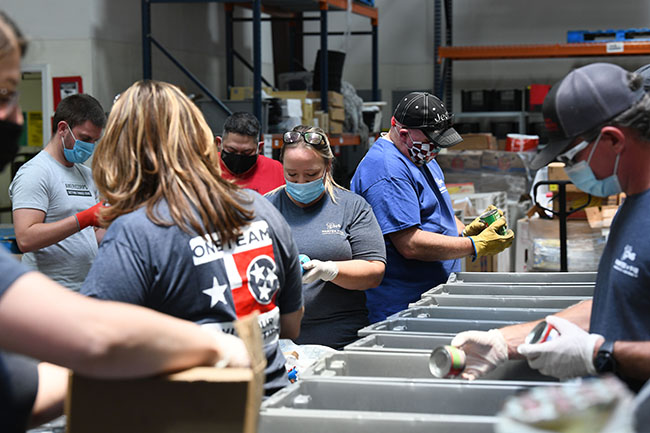
Earlier in June, High Plains Food Bank asked for volunteers, and Pantexans answered that call. On June 12, 10 Pantexans helped sort and pack at the HPFB warehouse. The HPFB partners with over 190 different agencies to help end hunger in the Texas Panhandle. Before the pandemic, HPFB was distributing more than 6,000,000 meals each year. The food bank’s goal during the COVID‑19 crisis is 2,000 meals daily.
I am mission success: Gary Sanders
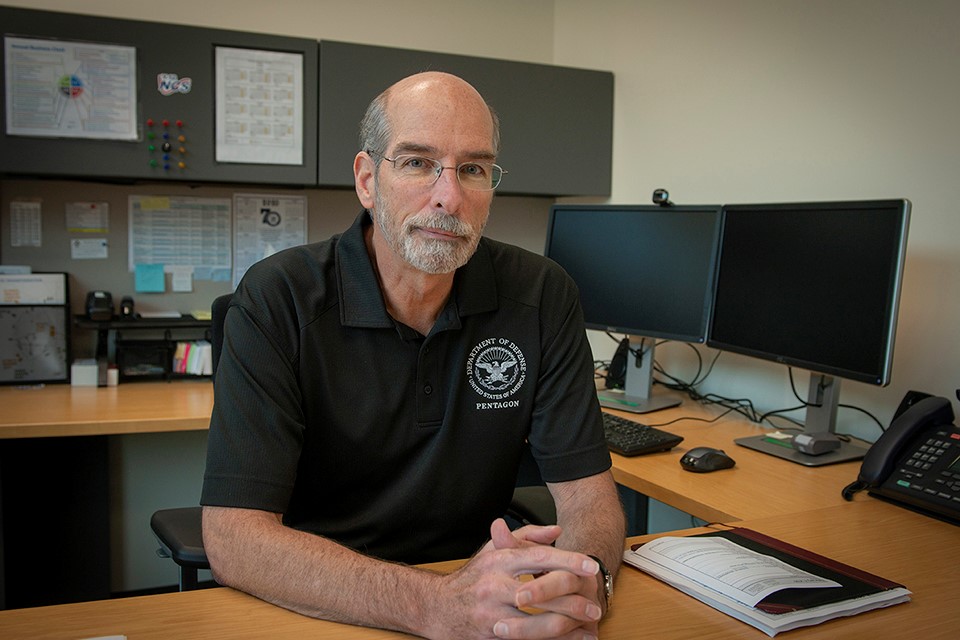
Mission Engineering is led by Gary Sanders, who has a wealth of experience within the nuclear weapons complex. |
Gary Sanders has led a unique and distinguished career, including stops at the Pentagon and the U.S. Department of Energy Headquarters, where he interacted with top defense brass and foreign nuclear agencies. However, as a child, he aimed higher.
“I always wanted to be an Air Force pilot,” Sanders recalled, “but they wouldn’t let me fly because of my vision.” Instead, he pursued a new path — nuclear engineering and reactor design.
“I never could have predicted all the opportunities I have had,” said Sanders, whose opt in attitude has kept him on the go. An engineering internship at Bettis Atomic Power Laboratory led to graduate school and Sandia National Laboratories, where he helped design the nuclear weapons that Pantex and Y-12 maintain and refurbish today. Fewer than 12 years after starting his career, Sanders had his first special assignment in Washington, D.C., which eventually resulted in multiple assignments with the Air Force.
“I still didn’t get to fly their planes, but I did get to improve the safety features of their nuclear weapons.”
Before joining CNS, Sanders and his wife thoroughly enjoyed two years of retirement. “We’d alternate between visiting mountains and beaches,” he recalled, noting that outside of work he likes to scuba dive and hike. “I also volunteered at the aquarium and really enjoyed raising multiple litters of puppies for the local animal shelter,” Sanders said.
Why are you mission success, and how was it proven during the sites’ reduced, mission critical operations?
Mission Engineering enables Pantex and Y-12 Operations. Production equipment must work, project teams need to be able to do their updates, nuclear safety has to be in place, and so much more. The sites literally cannot do their mission without us, and we are useless if they can’t use what we design and build.
During the reduced, mission critical status, the importance of Mission Engineering was proven yet again: Approximately 80% of the Pantex work to build and surveil weapons continued, and we had teams set up to help with their Safety Basis, tools and procedures. Virtually all of the Development work continued as mission essential, including work on purifying uranium, melting binary, performing readiness assessments of lithium technology, and much more. All Engineering support for the Uranium Processing Facility continued across multiple shifts, and most project engineering support continued, including using computer-aided design to perform designs from home.
How did your opinion of your work environment change as CNS sites were placed in reduced, mission critical status? What is your favorite aspect about your work environment?
The flexibility to perform a large degree of engineering design work remotely has been eye opening and only made possible by the heroic support of Information Solutions and Services. I believe teleworking will permanently change some of how we do business in the future to accommodate family dynamics.
As for my favorite aspect, hands down, it is not having to wear a suit and tie. I wore both for years in Washington, D.C., while working at the Pentagon. I brought only one suit with me when I moved to Tennessee.
As an employee, what do you want to be remembered for?
I can think of two things. First, asking two important questions: Why are we doing it this way, and can we do it better? And second, for reinforcing educational standards for Pantex and Y-12 Engineering positions. An engineering degree denotes a level of technical rigor that must be in place for certain aspects of our work.
What work advice would you offer someone who is new to Pantex and Y-12?
Be open to experiences and challenges — they will both come, and both provide opportunities. Also, visit or transfer between the sites. It’s important to understand the people and challenges at both locations.
What one thing would your coworkers be surprised to know about you?
I was not raised in the United States. My father worked for U.S. Steel, which took us to Puerto Ordaz, Venezuela, where I grew up.
Transition of Pressing Operations approved for Pantex
Successful transition to modern infrastructure
AMARILLO, Texas – For more than five decades, the Pantex Plant has manufactured high explosive charges for weapons in the Nation’s nuclear stockpile. Last month, those operations were successfully transferred from its outdated WW II-era facility to the modern High Explosives Pressing Facility (HEPF).
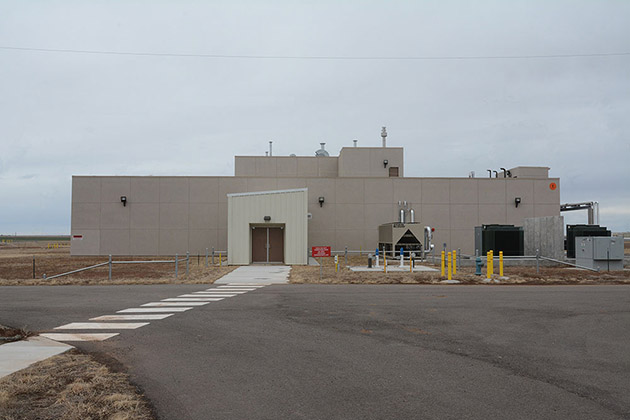
The HEPF has introduced a more efficient process, improved safety, and reduced transportation costs. The 45,000-square-foot facility consolidates packaging, staging, pressing, inspection, machining, and density operations, which decreases risks and costs associated with transporting a main-charge high explosive from one building to the next. It is estimated that the HEPF will save more than $92 million over the life of the facility.
The HEPF was authorized for high hazard operations on January 8, 2019, and released to produce weapon-grade explosive charges in March of 2019. Throughout the first year of authorization, a graded approach of operations was performed until steady-state production rates were achieved. Based on those achievements, more than 100 parts have been pressed in the new facility.
“The startup and authorization of this new facility was a significant effort on the part of multiple organizations at Pantex,” according to Robert McClary, Director of High Explosives Manufacturing. ”Now that steady-state production has been achieved in the new facility, Explosives Technology is poised to meet the demands of the nuclear weapons complex for the next 50 years.”
The explosive hemispheres for all future rebuilds, life extension programs, and Joint Test Assemblies will be pressed, machined, and X-rayed in the HEPF.
The legacy facility that HEPF replaced was placed into a safe and stable configuration in March of 2020, and is slated for demolition in the coming years.
Consolidated Nuclear Security, LLC (CNS) operates the Pantex Plant, located in Amarillo, Texas, and the Y-12 National Security Complex, located in Oak Ridge, Tennessee, under a single contract for the U.S. National Nuclear Security Administration. Pantex and Y-12 are key facilities in the U.S. Nuclear Security Enterprise, and CNS performs its work with a focus on the absolute priorities of safety, security, quality, mission delivery and cost efficiency.
For more information on each site, visit www.pantex.energy.gov or www.y12.doe.gov. Follow Pantex on Facebook, X or LinkedIn. Follow Y-12 on Facebook, X, and LinkedIn.
CONTACT
Steve Myers
Communications
Office (806) 573.0490
Stephen.Myers@pantex.doe.gov
Pantex/Amarillo Area Foundation Announce Community Investment Fund Grants Awarded
More than $850,000 invested in local nonprofits across Texas Panhandle
AMARILLO, Texas- Nonprofits in the Texas Panhandle will be better able to expand or continue their missions thanks to grants from Consolidated Nuclear Security’s (CNS) Pantex Community Investment Fund, administered by the Amarillo Area Foundation.
CNS, which manages the Pantex for the U.S. National Nuclear Security Administration, created an advisory committee to determine distribution of the funds. The committee prioritized the submissions from organizations located and operating in the 12 contiguous counties surrounding Pantex, which includes Armstrong, Carson, Deaf Smith, Donley, Gray, Hall, Hutchinson, Moore, Oldham, Potter, Randall and Swisher.
Including the latest round of grants, CNS has donated more than $860,000 to area non-profit organizations since 2016 through the Amarillo Area Foundation.
“Our goal by working with the Amarillo Area Foundation, is to give our employees a voice in determining where corporate dollars are invested in the community where they work, live, and volunteer,” said Jason Bohne, CNS Communications and Public Affairs director. “As a company, we’re extremely pleased to partner with community organizations for the betterment of Amarillo and the Texas Panhandle - where our employees work, live, and give.”
The advisory committee selected grantee organizations based on the following funding preferences and priorities: Basic Needs, Child and Family Development, Education, Community Development, Financial Literacy, and Health and Wellness.
Recipients and their grants are as follows:
A World for Children - $5,000: To support Bridging the Gap program used to help normalize and improve the quality of life for abused, neglected and traumatized children in our care in the Amarillo area.
Amarillo Area Court Appointed Special Advocate (AACASA) - $7,500: For recruitment, training, and retaining CASA Volunteers who advocate for children of abuse and neglect through the efforts of trained volunteers, appointed by the court to ensure them a safe, nurturing and permanent environment.
Amarillo Children’s Home - $10,000: To support “Feed the Tummy Fill the Soul” program which addresses a basic human need-hunger-while teaching valuable life skills often foreign to foster children.
Another Chance House - $7,500: To provide program support for men who are homeless or at risk of homelessness.
Faith City Mission - $6,000: To provide for basic needs for homeless and impoverished individuals in Potter and Randall Counties and throughout the Texas Panhandle.
Family Care Foundation - $6,000: To support dental assistance for uninsured children and adults.
Heal the City Free Clinic - $6,000: To provide equipment that addresses language barriers for chronic care program, Shalom, which serves uninsured and chronically ill patients that are Spanish speaking only.
Hope Lives Here - $6,000: To support the Harley’s Legacy program for support dogs and vets.
Make-A-Wish Foundation of North Texas - $7,500: To support wish granting in the Texas Panhandle.
Martha’s Home - $10,000: To support residents’ needs for homeless single women and homeless mothers with their children.
Ronald McDonald House Charities - $10,000: To support Share a Night, which helps families of ill children who live outside the Amarillo City limits and need a home away from home while their sick child receives medical care in Amarillo.
Sharing Hope Ministry - $10,000: To support Patsy’s Place Transitional Home which provides shelter, basic necessities, education, family reunification and health related services to post-offending, local women. Assistance will also be given to post-offenders who are struggling through the COVID crisis.
Texas Ramp Project - $5,000: To support Amarillo Ramp Project for low-income older adults and people with disabilities in the Panhandle.
The Downtown Women’s Center - $7,500: To provide program support for shelter operations, counseling, and wrap-around client services for women in recovery from substance addictions and their children.
Turn Center - $10,000: To support the purchase of therapy equipment for children.
Upbring - $7,500: To Support the Amarillo Foster in Texas program which serves children removed from their homes by Child Protective Services due to abuse or neglect.
Consolidated Nuclear Security, LLC operates the Pantex Plant, located in Amarillo, Texas, and the Y-12 National Security Complex, located in Oak Ridge, Tennessee, under a single contract for the U.S. National Nuclear Security Administration. CNS member companies include Bechtel National, Inc.; Leidos, Inc.; ATK Launch Systems, Inc.; and SOC LLC. Pantex and Y-12 are key facilities in the U.S. Nuclear Security Enterprise, and CNS performs its work with a focus on performance excellence and the imperatives of safety, security, zero defects and delivery as promised.
For more information on each site, visit www.pantex.energy.gov or www.y12.doe.gov. Follow Pantex on Facebook, X or LinkedIn. Follow Y-12 on Facebook, X, and LinkedIn.
CONTACT
Steve Myers
Communications
Office (806) 573.0490
Stephen.Myers@pantex.doe.gov
The frontline cleaning‑up COVID‑19
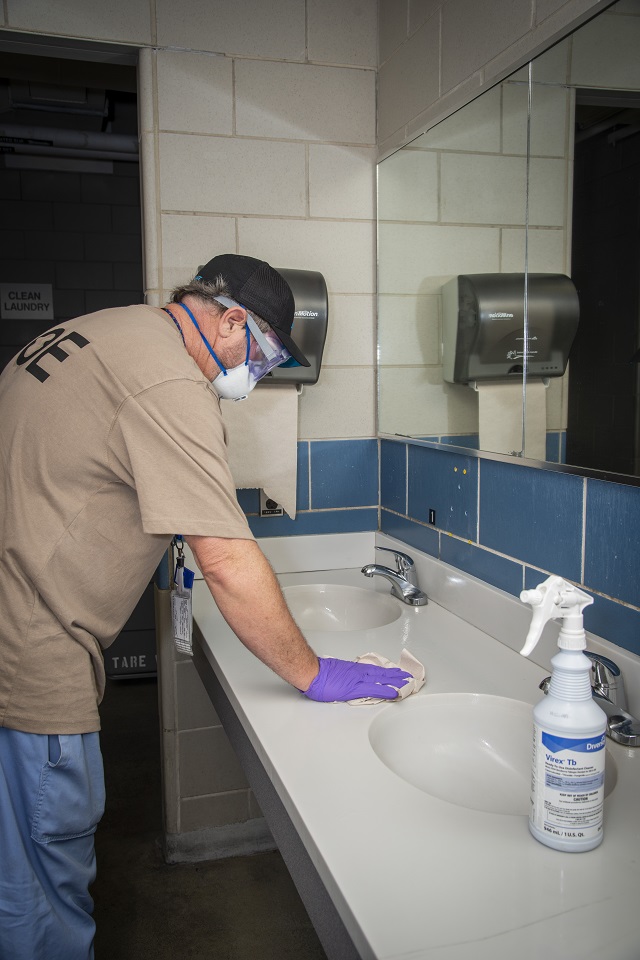 Y-12 Building Services and Lawler-Wood Maintenance and Facilities Technicians continue to disinfect commonly used areas and ensure their safety using face masks and gloves. |
When the presence of COVID-19 approached our corner of the world, causing many to brace for impact, Pantex Utilities and Maintenance, Y-12 Building Services, and Lawler Wood Maintenance and Facilities technicians at both sites were called to action. As the first line of defense against germs on site, these professionals are responsible for contributing to the overall health of employees especially during viral seasons. Only this time, they were courageously working against a different and unknown pathogen.
Armed with a dedicated task force, N95 respirators, gloves, goggles, and other necessary personal protective equipment, teams have worked quickly and diligently over the course of the outbreak to sanitize surfaces and spaces throughout Pantex and Y-12 facilities.
“We have a very professional team of building services employees who take safety very seriously,” said Y-12 Building Services Supervisor Nate Criswell. “In addition to our routine best practices, we discussed the virus more in depth and shared as much information as we could get our hands on in regards to emerging best practices as it relates to cleaning, PPE, and hygiene.”
Increased cleaning duties to twice a shift, along with the everyday janitorial duties, made for long days and even some extra hours on the weekends to maintain 24/7 operations.
“Our team performed at a high level,” Johnny Heredia, Pantex Infrastructure specialist, said. “The whole department was focused on the same goal: not getting anyone sick. We sometimes changed what we were doing in order to achieve the goals in an even more effective and efficient manner. Our team adapted and has stepped up our activities to maintain productivity.”
Already ahead of the curve in terms of safety processes and equipment, there weren’t many standard precautions for the building services team to take that weren’t already in place. Through team briefings, crews were refreshed on the differences and processes for cleaning, sanitizing, disinfecting, choosing the right chemicals for the job, and using correct PPE at all times. With plans drawn and scheduled, personnel were ready to eliminate the wake of the virus.
“Early on, our team was asked to respond to situations where employees were being sent home with symptoms or had been confirmed to have the virus,” Criswell said. “Through preparation, knowledge, and having the proper PPE, our teams deployed out to these responses more confident in the fact that they were protected and they knew the best ways to treat these areas to prevent further spread.”
As attention was directed to slowing the spread, crews began expanding to common zones, offices, breakrooms, waiting areas, etc. At the John C. Drummond Center, Lawler Wood Pantex also took advantage of reduced personnel onsite to deep clean areas such as air filters, windowsills, elevator shafts, and floors.
Throughout Jack Case Center and New Hope Center, Lawler Wood Y-12’s first, second, and third shift crews performed efforts beyond routine deep cleaning.
“Lawler Wood Y-12 employees have worked tirelessly 24/7, often overtime, to respond to requests for additional deep cleaning and disinfecting areas,” said Lawler Wood Y-12 Facility Manager Vicky Bowling. “We greatly appreciate these efforts.”
For Y-12 Building Services, members were divided into teams of two using Clorox 360 equipment. One person to help set up the area and direct the disinfectant cord, and one person to spray. This resulted in an efficient process to cover more ground. Successful disinfection sweeps were completed when all requested areas were sprayed, labeled, dated, and closed.
“I have continuously reminded my folks that what they do day in and day out matters more than they know,” Criswell said. “We are working tirelessly to keep our work family and our nation’s valuable nuclear workers safe and healthy.”
Fearless and focused, both teams remained dedicated to the safety of the mission by taking pride in the details of their work. All the while, knowingly protecting the site’s most precious assets — its people.
“Thank you to who are putting in long days to make sure we have access to the necessities during an immensely challenging time,” Heredia said. “We know you are doing crucial work, and we appreciate you. We couldn’t get through this without you.”

Mandy Miller of Lawler Wood Pantex cleans and disinfects the breakrooms in the JCDC.
I am mission success: Corey Strickland
Learn more about Corey Strickland, Pantex deputy site manager, and how he helps make our mission a success.

Corey Strickland, Pantex deputy site manager |
Take five minutes and learn about CNS’s Corey Strickland, Pantex deputy site manager. “I am mission success” profiles share how each employee feels tied to the Pantex and/or Y 12 mission. All views and opinions are the employee’s own and do not necessarily reflect those of CNS.
Corey Strickland has had a long and successful career at Pantex - 26 years, 3 months, 2 weeks, and 4 days to be exact. He started as a production technician and has worked many positions within the Operations and Program Management organizations before becoming the deputy site manager for Pantex in 2016.
Strickland currently serves as the lead of the Senior Management Advisory Response Team, or SMART - a team that has been critical during the site’s transition to essential mission critical operations status during the COVID-19 pandemic. With NNSA’s approval, the SMART has been working logistics to ensure Pantex systematically moved as many people as possible away from the site.
The SMART will also play an important role in the site transitioning from current operational status to normal operations.
Strickland says the SMART's role will be “ensuring that the site is ready to bring those people back to the plant and that we have done everything we possibly can to make the transition to normal operations as smooth as possible.”
Corey and the SMART have also used the Emergency Management Information System during their work to transition to mission critical status.
“The SMART has used EMInS to function as the tool where data are collected, actions are tracked, and as a resource tracking tool to ensure the SMART team can quickly evaluate the health of our employees,” he said.
Strickland said it has been amazing to watch how the plant has responded to the pandemic.
“Every time I host a site visitor, I tell them that we are proud of what we do for our nation and that they will feel that pride when they visit our work areas,” he said. “During this unprecedented time that pride continues to shines through!”
What daily task (specific meeting, report, etc.) lets you know you’re helping achieve the CNS mission?
Daily interaction with the entire plant and working with those employees to further our mission lets me know I’m helping. Providing leadership and keeping the communication lines open are key to our mission success.
Are you doing what you envisioned as a young adult?
I still don’t know what I want to be when I grow up.
What CNS principle drives you to be successful?
Setting high standards! If we don’t set our standards high, we will never reach the highest of levels we need to be in this business.
What work advice would you offer someone who is new to Pantex or Y-12?
Find a mentor and be patient. Take pride in what you do … no matter what it is.
What’s your top bucket list item and why?
To play golf in Scotland would be amazing because it’s the birthplace of the game!
Use Hwy 60 when traveling to or from Pantex Plant
Anyone traveling to or exiting from the plant towards Amarillo is encouraged to use Highway 60. The overpass at FM 2373 and I-40 is currently under construction.
The eastbound exit onto FM 2373 at I-40 will be closed for the duration of the project estimated to be completed by Friday, November 20. The westbound exit will remain open and the westbound entrance ramp will remain open until mid-August.
Pantex contractor CNS contributes more than $150k to local charities
Amarillo Area Foundation, United Way relief funds among recipients
AMARILLO- As the Covid-19 pandemic continues to impact the region, Consolidated Nuclear Security (CNS) and Pantex employees are reinvesting in their communities in a number of ways. CNS manages and operates the Pantex Plant for the U.S. Department of Energy’s National Nuclear Security Administration.
CNS recently donated $10,000 to the United Way of Amarillo & Canyon Emergency Relief Fund, and another $10,000 to Amarillo Area Foundation (AAF) Disaster Relief Fund. These contributions are in addition to earlier donations of $2,500 to the High Plains Food Bank and $2,500 to United Way of Amarillo & Canyon Emergency Relief Fund. Additionally, Pantex participated in the United Way of Amarillo & Canyon’s first-ever Virtual Telethon, which raised more than $80,000 for the COVID-19 Emergency Relief Fund.
“As a company, we are happy to partner with community organizations for the betterment of Amarillo and the Texas Panhandle—where our employees work, live, and give,” said Jason Bohne, CNS Senior Director of Communications. “During this stressful and difficult time, we feel it is even more important to take an active part in our communities and the welfare of residents across the area.”
CNS and Pantex employees are also continuing a five-year tradition of providing grants to nonprofit organizations in the Texas Panhandle through the CNS Pantex Community Investment Fund, in coordination with the Amarillo Area Foundation. An advisory committee of Pantex employees are determining distribution donations totaling $121,500. The committee prioritized the submissions from organizations located and operating in the 12 contiguous counties surrounding Pantex to fund basic needs, child and family development, education, community development, financial literacy, and health and wellness. To date, including the latest round of grants, CNS has donated more than $860,000 to area non-profit organizations since 2016 through the Amarillo Area Foundation. For this year’s grants, all applications have been received and funds are scheduled for distribution in June.
CNS also contributed $10,000 to the Big Brothers Big Sisters of the Texas Panhandle’s “Bowl for Kids’ Sake” fundraiser after this year’s event was cancelled.
Earlier this spring, Pantex sponsored and hosted the Department of Energy’s Regional Science Bowls for middle and high school students.
CNS also manages the Y-12 National Security Complex in Oak Ridge, Tennessee, and is supporting ongoing efforts to combat the COVID-19 outbreak in East Tennessee.
“Consolidated Nuclear Security, LLC operates the Pantex Plant and Y-12 National Security Complex in support of the National Nuclear Security Administration. CNS member companies include Bechtel National, Inc.; Leidos; ATK Launch Systems; and SOC LLC, with Booz Allen Hamilton, Inc. as a teaming subcontractor.”
Consolidated Nuclear Security, LLC (CNS) operates the Pantex Plant, located in Amarillo, Texas, and the Y-12 National Security Complex, located in Oak Ridge, Tennessee, under a single contract for the U.S. National Nuclear Security Administration. Pantex and Y-12 are key facilities in the U.S. Nuclear Security Enterprise, and CNS performs its work with a focus on the absolute priorities of safety, security, quality, mission delivery and cost efficiency.
For more information on each site, visit www.pantex.energy.gov or www.y12.doe.gov. Follow Pantex on Facebook, X or LinkedIn. Follow Y-12 on Facebook, X, and LinkedIn.
CONTACT
Steve Myers
Communications
Office (806) 573.0490
Stephen.Myers@pantex.doe.gov
The Mask Makers of CNS
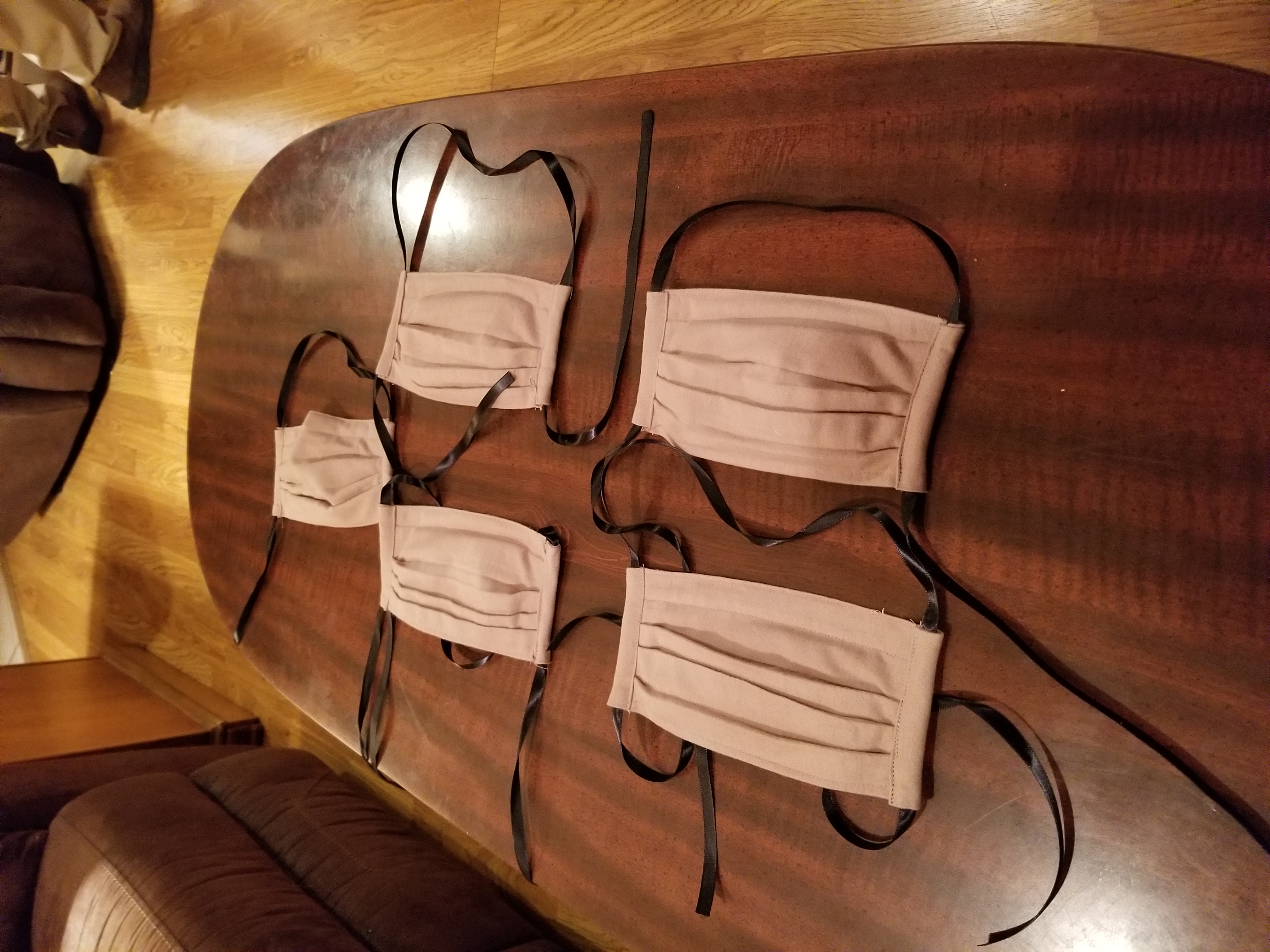
In response to the COVID-19 pandemic, many employees from both Y-12 and Pantex have become “mask makers” using their skills and talents behind a sewing machine to make masks for their friends,
neighbors and coworkers.
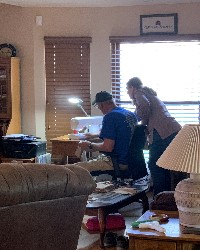
Pantexan Charlotte Thomas and her husband Brian Thomas |
Pantexan Charlotte Thomas has made more than 250 masks, along with the help of her husband Brian Thomas, Potter County Sheriff. He wanted to make sure his people working in the fields and those working in the jail had masks, but like everyone else they couldn’t order any. So Charlotte reached out to a friend from Sunday school who sews and asked for help. The friend directed Charlotte to a YouTube site with a 15-minute mask. On that first day they didn’t even complete one mask, but before the weekend was over they had finished 5 and by the next weekend they’d completed 25. Masks were distributed to their daughter who is an RN working in home health, River Road ISD, and others along with the Potter County Sheriff’s Office.
Charlotte said “Once the picture got out of Brian learning to sew – he had several people call and offer to make masks for him so he very graciously said thank you. And now it is not such a frantic chore to hurry up and finish them. But when you have a family that is comprised of a first responder, a nurse, and a teacher – you learn from the start to give back to the community – they work in those professions because they love serving and that is why we love them. So you help them in any way you can.”
Fellow Pantexan Lauri Minton has also been busy making masks for friends, family, and people in the medical field to wear over their N-95 masks. After her teleworking day ends and on weekends she has made more than 115 masks and a few surgical style hats for a neighbor who is a nurse practitioner in a local pediatric clinic.
Lauri said “I made some for the IS&S folks at Pantex who were issuing laptops and tokens so that many of us could telework; I think having the masks available helped ease their anxieties about exposure risks.”
Y-12er Jennifer Lawson has lost count of how many masks she and her sister have made, but estimate they’re up to around 100.
Jennifer said making masks is a way she can feel like she’s helping people during this scary time. “They at least have the protection of a mask, and in a fabric they chose,” she said. “I view it as a service
project and a way to pay forward all the blessings I have. I still have my job, and am able to work from the safety of my home. Also, lots of people don’t know how to sew, and sewing machines are scarce, along with elastic, fabric, and thread.”
Jennifer and her sister don’t accept payment for the masks they make, because she says the joy come from the giving.
“If people insisted, we asked them to find some way to help someone else or make a donation,” she said. “That way, we keep it going. Plus, people have been sending photos wearing the masks they picked out and seeing those just makes my week.”
Another Pantexan Terri Woodruff has also made masks for friends and coworkers. To date she has made between 150-175 masks and continues to make more as people request them.
Lauri also said “most of us are not doing this for the attention or for recognition – I am personally doing it because I feel called to do it (as a Christian). I have been blessed with MUCH, and ‘to whom much is given, much is expected.’”
We salute these and ALL of the “mask makers” of CNS for their contributions to their family, friends, coworkers, and our communities at large.

Check it out: Sheltering at home brings new hobbies
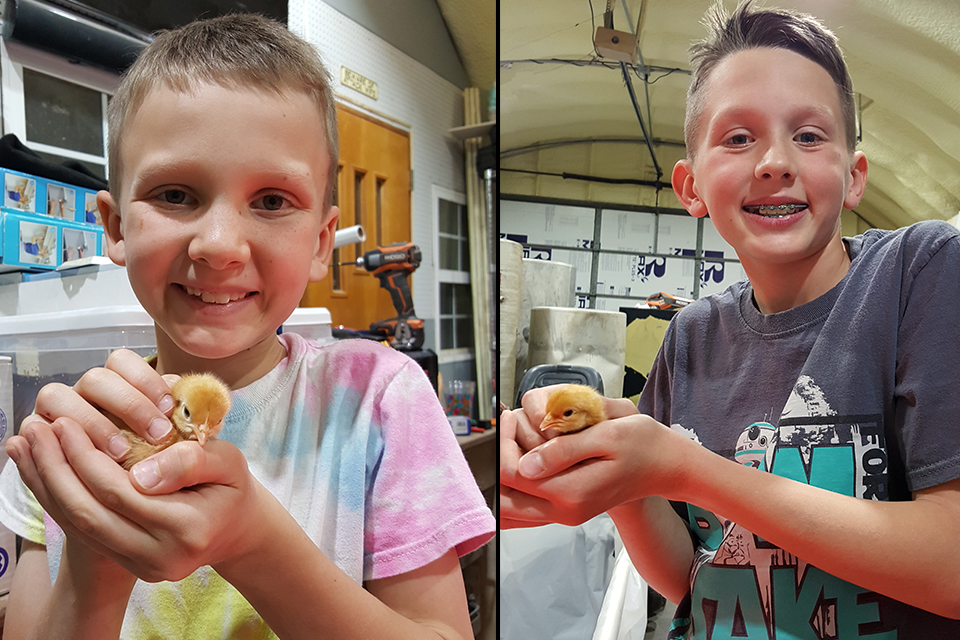
During their time sheltering at home, Pantexans Mandi and Jeremy Neusch, both of Mission Engineering, along with their elementary age sons have taken on home‑schooling in a super practical
way — they’re raising 38 chickens, started a garden, and their cat had kittens! They also planted 107 trees as a future wind break around their farm, and they’re doing all of this on top of teleworking each
day and the boys completing school work through distance learning. Mandi said, “Who says sheltering means you have to sit on the couch?"